
Introduction
Moving to a new home is exciting, but for plant lovers, it comes with a unique challenge: how to move plants safely without harming them. Whether you’re relocating across town or across the country, your green companions need special care during the transition. Plants are living organisms that can easily suffer from shock, root damage, or environmental stress if not handled properly. This comprehensive guide will walk you through everything you need to know to move plants without damaging them, ensuring your botanical friends thrive in their new environment.
Planning Your Plant Move
Success in plant relocation starts with proper planning. Unlike furniture or boxes, plants require careful timing and preparation to survive the moving process.
Best Time to Move Plants
Timing is crucial when relocating garden plants. The ideal time to move most plants is during their dormant period, typically early spring or late fall. During these months, temperatures are moderate, and plants aren’t actively growing, which means they’ll experience less stress. Avoid moving plants during extreme heat or freezing temperatures, as these conditions can cause irreversible damage. If you must move during summer or winter, take extra precautions to protect your plants from temperature extremes.
Assessing Your Plants’ Health
Before the move, evaluate each plant’s condition. Healthy plants are more resilient and better equipped to handle the stress of relocation. Check for signs of disease, pest infestations, or weakness. If you notice any issues, treat them at least two weeks before moving. Some plants may be too fragile or diseased to survive the move, and it might be kinder to leave them behind or give them to a friend who can nurture them back to health.
Creating a Moving Checklist
Organise your plant-moving techniques with a detailed checklist. List all your plants, noting their specific needs, sizes, and any special care requirements. This inventory will help you determine how many supplies you need and plan your vehicle space accordingly. Don’t forget to research plant import regulations if you’re moving to a different state or country, as some regions may restrict the import of certain plants.
Preparing Plants Before the Move
Proper preparation is essential to protect plants during move and minimize transplant shock.
Pruning and Trimming Guidelines
About 2 to 3 weeks before moving, prune your plants to make them easier to manage. Remove dead or yellowing leaves, trim overgrown branches, and cut back any leggy growth. This not only makes plants easier to pack but also allows them to focus their energy on root health during the transition. However, avoid heavy pruning, as plants need sufficient foliage to photosynthesise and remain healthy. For flowering plants, remove blooms and buds, as they require extra energy the plant needs for recovery.
Watering Schedule Before Moving
Adjust your watering routine in the days leading up to the move. Water your plants thoroughly two to three days before moving day. It gives the soil time to absorb moisture without being soggy, which would make pots heavier and increase the risk of fungal growth. Avoid watering on moving day, as wet soil can spill and create a mess. The goal is to have slightly moist soil that holds together but isn’t dripping wet.
Treating for Pests and Diseases
Scrutinise all plants for pests such as aphids, spider mites, or scale insects. Treat any infestations at least a week before moving to prevent pests from spreading to your new home or to other plants during transit. Use appropriate organic or chemical treatments based on the pest type. Clean the leaves with a damp cloth to remove dust and check the undersides where pests often hide.
Essential Supplies You’ll Need
Gathering the right materials makes transplanting plants safely much easier and more efficient.
Packing Materials for Plants
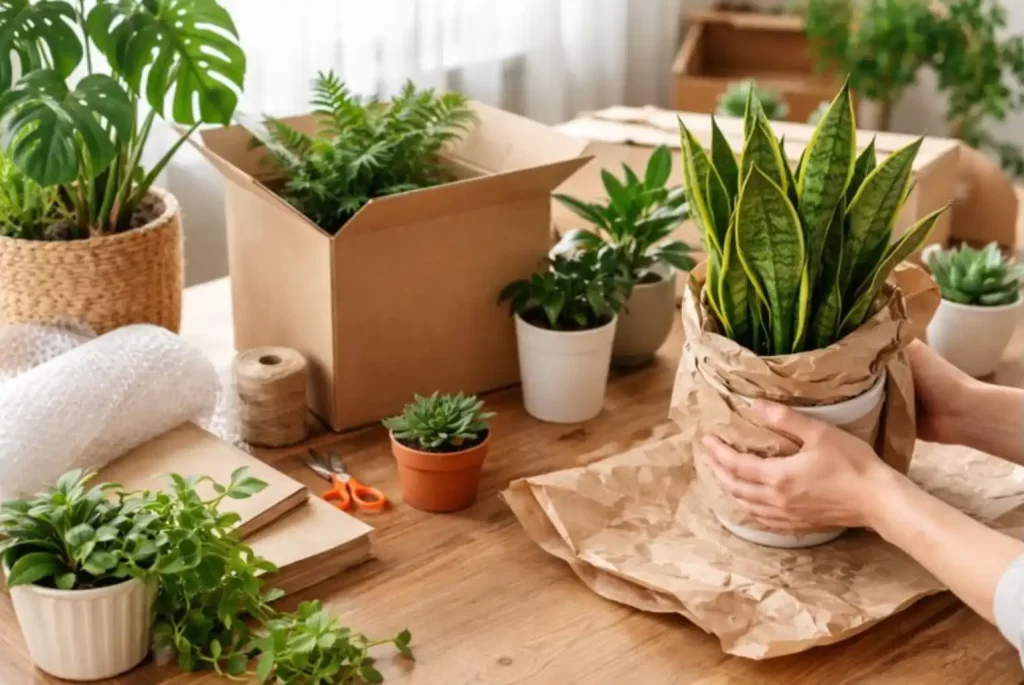
Invest in quality packing supplies specifically for plants. You’ll need newspaper, bubble wrap, plastic bags, and a soft cloth for wrapping. Paper or plastic sleeves work well for protecting delicate foliage. For taller plants, consider cardboard tubes or stakes to provide support. Avoid using materials that could trap excessive moisture, as this can encourage mould growth during transit.
Boxes and Containers
Sturdy boxes with proper ventilation are crucial. Cardboard boxes work well for moving houseplants, but make sure they have air holes punched in the sides. For valuable or delicate plants, consider investing in specialised plant boxes or crates. The boxes should be tall enough to accommodate the plant’s height without crushing the foliage. Plastic bins with lids can also work, but ensure adequate airflow to prevent condensation.
Protective Equipment
Don’t forget materials to secure pots and prevent tipping. Packing peanuts, crumpled newspaper, or towels can fill empty spaces in boxes. You’ll also need packing tape, labels, markers, and possibly rope or bungee cords to secure plants in your vehicle. Gloves will protect your hands, especially when handling cacti or plants with thorns.
Step-by-Step Moving Process for Potted Plants
Follow these steps to ensure plants arrive safely at their destination.
Securing the Soil and Pot
Start by covering the soil surface with plastic wrap or a damp cloth secured with rubber bands or string. This prevents soil from spilling during transit. For heavier pots, place them in plastic bags and tie the bags loosely around the base of the plant. If you’re concerned about the pot breaking, wrap it in bubble wrap or place it in a slightly larger container with padding between the pot and the container.
Wrapping Plants Properly
Gently gather the branches or leaves and wrap them loosely in newspaper or tissue paper. For delicate plants, create a paper sleeve by rolling a newspaper into a cone and wrapping it around the plant. Secure with tape, but don’t wrap too tightly, as plants need some air circulation. For spiky plants like cacti, use thick layers of newspaper or foam padding to protect both the plant and your hands.
Labelling and Organization
Mark each box clearly with “FRAGILE – LIVE PLANTS” and indicate which side should face up. Label boxes with the plant name and specific care instructions, such as “Keep in shade” or “Water upon arrival.” It helps movers handle them appropriately and makes unpacking easier. Group plants with similar needs together.
Loading Plants in the Vehicle
Place plants in your personal vehicle rather than the moving truck when possible. This gives you better control over temperature and handling. Position boxes on flat surfaces where they won’t tip over. Secure them with seat belts or place them on the floor where they’re stable. Never put plants in the trunk, as it gets too hot and lacks ventilation. For long-distance moves, plan regular stops to check on your plants and let them get fresh air.
Moving Garden Plants and Shrubs
Relocating garden plants requires different techniques than moving potted plants.
Digging Up Plants Correctly
Choose plants that are worth the effort of transplanting, as not all garden plants survive relocation. Begin digging at least a week before moving day. Water the plant thoroughly the day before digging to soften the soil. Dig a circle around the plant, starting about 12 inches from the stem for small plants and up to 3 feet for larger shrubs. Dig deep enough to get under the root ball without cutting major roots.
Preserving the Root Ball
The root ball preparation is critical for plant survival. Once you’ve dug around the plant, carefully lift it with as much soil attached to the roots as possible. Wrap the root ball immediately in damp burlap or an old sheet, securing it with twine. Keep the root ball moist but not waterlogged. For larger plants, you may need help lifting them to avoid damaging the roots or your back.
Temporary Storage Solutions
If you can’t replant immediately, store garden plants in a shaded area and keep the root balls moist. Don’t let them sit for more than a few days, as roots can dry out quickly. For extended delays, consider potting them temporarily in large containers with quality soil.
Replanting at the New Location
When you arrive at your new home, prioritise replanting garden plants as soon as possible. Prepare the planting holes in advance if you can. Dig holes twice as wide as the root ball and just as deep. Remove the burlap wrapping, place the plant at the same depth it was growing before, and backfill with soil. Water thoroughly and add mulch to retain moisture.
Transporting Plants Safely
Proper plant transportation during the actual move is where all your preparation pays off.
Temperature Control During Transit
Plants are sensitive to temperature extremes. During summer, use the air conditioner to keep the vehicle cool, but avoid blowing cold air directly onto plants. In winter, protect plants from freezing by keeping them in the heated cabin of your vehicle. Never leave plants in a parked car, as temperatures can quickly become dangerous.
Securing Plants in the Vehicle
Arrange plants so they won’t shift during acceleration, braking, or turns. Use boxes, bags, or towels to fill gaps between pots. For tall plants, you may need to lay them gently on their side, but try to keep them upright when possible. Secure everything so that even a sudden stop won’t send plants flying.
Long-Distance vs. Short-Distance Moves
Short-distance moves are relatively straightforward, as plants spend minimal time in transit. For long-distance relocations, plan your route with plant care in mind. Avoid leaving plants in the vehicle overnight. If you must stop at a hotel, bring your most valuable plants inside. Research climate differences between your old and new locations to prepare plants for acclimatization.
Post-Move Plant Care
The work doesn’t end when you arrive at your new home. Proper post-move plant care is essential for recovery.
Immediate Care After Arrival
Unpack plants as soon as you arrive. Remove all wrapping materials and check each plant for damage. Water plants that have dried out during transit, but don’t overwater. Place plants in a location with appropriate light, though you may want to start them in slightly less light than usual to reduce stress.
Acclimatizing Plants to a New Environment
Plants need time to adjust to their new environment. Transplant shock is standard and can manifest as wilting, yellowing leaves, or leaf drop. This is normal and usually temporary. Avoid repotting immediately unless necessary. Let plants settle for a few weeks before making any significant changes.
Monitoring for Transplant Shock
Watch your plants closely for the first few weeks. Some leaf drop is normal, but excessive wilting or browning may indicate problems. Maintain consistent watering and avoid fertilising for at least a month, as stressed plants can’t effectively absorb nutrients. Provide extra humidity if you’ve moved to a drier climate by misting leaves or using a humidifier.
Watering and Fertilizing Schedule
Resume regular watering based on each plant’s needs, but check soil moisture carefully, as new conditions may affect how quickly the soil dries. Hold off on fertilising for 4-6 weeks to allow plants to recover from the move. When you do resume feeding, start with half-strength fertiliser and gradually increase to normal levels.
Common Mistakes to Avoid
Learn from these common errors to ensure successful plant relocation.
Overpacking Plants
While protection is essential, wrapping plants too tightly restricts air circulation and can damage delicate leaves and stems. Plants need some breathing room even during transit.
Ignoring Climate Differences
Moving from a humid to a dry climate, or vice versa, requires preparation. Research the conditions in your new area and be ready to adjust care routines accordingly. Some plants may not survive dramatic climate changes.
Moving During Extreme Weather
Avoid moving plants during heat waves, freezing temperatures, or storms whenever possible. If you must move during challenging weather, take extra precautions, such as insulating boxes or using cooling packs.
Conclusion
Moving plants without damage requires planning, patience, and attention to detail, but the reward of seeing your green friends thrive in their new home makes the effort worthwhile. By following these plant moving techniques, from proper preparation and packing to careful transportation and post-move care, you can ensure your plants survive and flourish after relocation. Remember that some stress is everyday, and most plants will recover with time and proper care. With these strategies, you’ll successfully transplant plants safely and continue enjoying your botanical collection for years to come in your new space.

