
Introduction
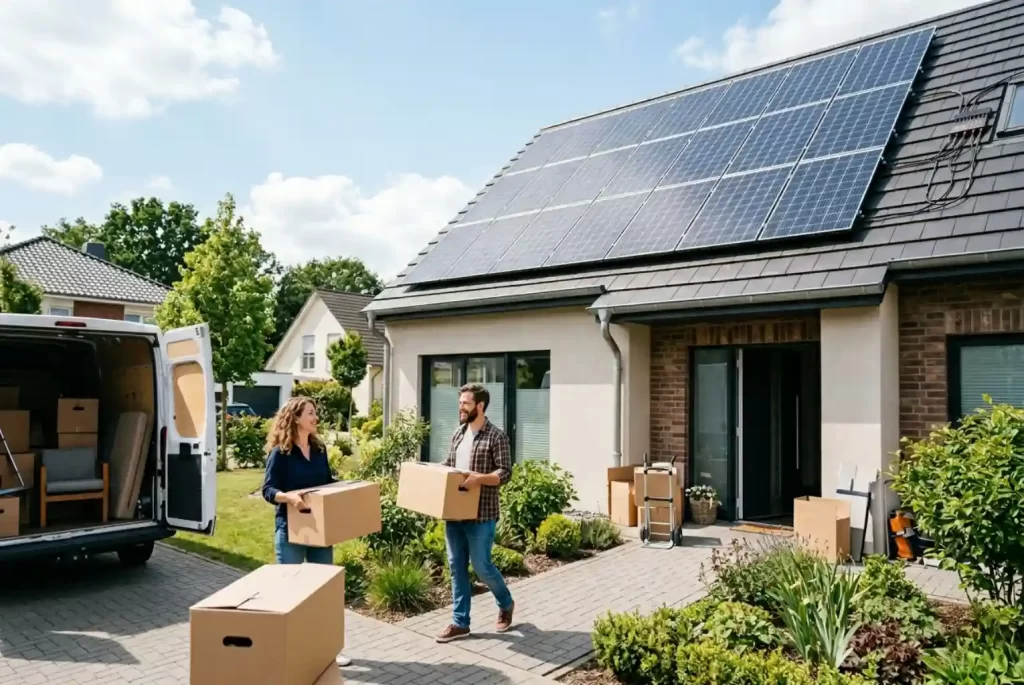
Moving homes is no simple task as is. Moving into homes with solar panels adds a whole new responsibility that a lot of buyers and renters are wholly unprepared for. This isn’t just about what you could save on utilities. It’s about learning the ins and outs of a technical system that is physically mounted to the building, legally bound to certain contracts, and directly tied to your electricity from day one.
If you ignore it, you will have warranty issues, the potential for hidden costs, and a system that underperforms. If you address it, you’ll have a substantial long-term advantage on energy costs.
Below is a practical guide, section by section of how to do things correctly.
Moving Homes with Solar Panels
The typical moving process consists of walls, fixtures, and appliances. A solar home purchase introduces a separate technical asset that is governed by its own rules, making this move more complicated.
The roof panels are tied to an inverter, utility meter, and potentially a battery storage unit, and the grid. Each of these pieces has a lifespan, maintenance history, and in many cases a legal agreement tied to it. Some systems are self-contained. Others are leased or have financing. That distinction alone can determine whether you are acquiring an asset or a liability.
Apart from ownership, there are safety concerns during the move, system documentation you must gather, and many steps that need to be taken before the system will function optimally for you. None of these issues will resolve themselves.
Considerations for Homes with Solar Panels
Before closing on a home and booking a moving truck, be sure to do a focused evaluation on the solar system.
Begin with the simple things. Look at the system geographically to spot possible damage or maintenance issues. Look for cracks, discoloration, dirt, or panels that aren’t flat.
Patch requests! Systems are maintained to the point where they can be monitored by the inverter or 3rd party. Request a year’s worth of data to measure against the manufacturer rating.
Know the system age. Permits and warranty information are very useful. A solar panel warranty lasts about 25 years, and the inverter is 10 to 15.
Be sure that the system is properly documented. Systems that are installed without permits can leave you with gaps in coverage and problems when you need to modify the roof or system in the future.
What is a Solar System?
This is where the most mistakes are made. Solar lease vs ownership is a common, costly mistake.
An owned solar system means you get all the equipment and the warranties that come with the equipment. You will also benefit from net metering with the electric company.
Unlike other agreements, leased systems, or Power Purchase Agreements (PPAs), are owned by the solar company, and as a result, you are paying for the produced power. PPAs also last 20-25 years and are not automatic transfers. To get an approved transfer, you must also qualify for it. If the solar company changes terms or denies transfer and you are purchasing a property with a leased system, this may result in an expensive problem. You would be responsible for the buyout.
Documents to collect before moving in:
- Certificates of the original warranty and installation contracts
- Agreements for the utility interconnection
- The net metering agreement, plus the details of the utility account, and the net metering related info
- Any documentation concerning the lease or the PPA including the transfer clauses and the remaining term
- Service records from the maintenance provider or installation company
Verbal promises should not be trusted. Everything must be documented.
Safety Considerations During Packing and Moving
For a successful and safe move, good solar panel maintenance and inspection are critical.
Any type of solar panel move must include a thorough inspection, especially to ensure they are not physically damaged or hurt during the move. For this reason, solar panels are a type of equipment that may be hazardous during a move. It has to be that they generate electricity whenever light is available, hence the system is live even when the main breaker is off. It is not also a good idea to work on a solar system (especially on the roof) without proper safety equipment. Rapid shutdown is one of the equipment and it is the most basic of safety equipment to use during the move. For most situations, it is a legal requirement.
Practical Safety Tips:
- Streamers should be told a building has an active solar system
- Keep ladders and long tools away from roof wires and conduit
- Do not stack boxes or materials near the inverter or battery unit
- Do not use pressurized water on the solar panels in an exterior cleaning on the moving day
If for any reason the move requires roof access, such as removing a satellite dish or adjusting an antenna or skylight, there should be an electrician or solar technician on site.
Post-Move Inspection and System Activation
Don’t assume that once you’re in the system is working properly just because the lights are on.
Within the first 30 days of your occupancy, have an inspection done by a professional solar panel checker. A certified solar technician should verify the inverter, connections, and panel outputs, as well as the mounting hardware. This is your baseline inspection to ensure that you are not inheriting an existing fault, and to have a documented inspection of the system’s state when you moved in.
Processing instruction steps and guidance:
- You must complete the net metering account transfer to your name with the utility provider.
- Access the system’s monitoring platform using the previous owner’s credentials. If these are not available, register to create a new user account.
- Verify the system is capable of sending energy to the grid via net metering.
- Look for fault codes by checking the inverter display or monitoring dashboard.
If the system was inactive for a period of time, some inverters need to be manually restarted and re-synchronized with the utility grid. This can be explained to you by your installation company.
Essentials for Long-Term Efficiency
Helping solar panels do their job of collecting and converting the sun’s energy into usable electricity is vital. Make the following steps part of your routine:
- Clean the panels at least 2 times a year. If you live in a very dusty or highly pollen populated area, you may need to do this more often. If panels are not cleaned, the output can be reduced by 5 to 25 percent. Use a soft brush and do not use any chemicals or abrasives.
- Each month make a plan to monitor the output of the system. Most inverters have the capability to monitor the system in real time, as well as historically. If you notice a drop in output, it indicates that there may be a fault, the panels may be shaded, or a situation may exist where a panel has malfunctioned. If you notice this quickly, the issue is usually simple to fix.
- Ensuring that solar panels operate at maximum efficiency is a process that continues to need attention. To guarantee this is the case, schedule a professional inspection. Such as torque testing of the mounting hardware, checking for hot spots, and an electrical check. This should be done every 3 to 5 years. If you have a battery as part of the system, it should be inspected every year.
Outline the Mistakes Homeowners Make with Solar-Equipped Homes
These mistakes are common. Most of them are preventable with some basic research.
Assuming the system works, while not checking. An inverter may show a green light, while being 40 % inefficient. There are some monitoring system which can tell you the efficiency.
Not transferring the net metering agreement. If the previous owner’s name the agreement is, you won’t get credited with the energy you spend to the grid, which is a financial loss.
Ignoring the lease transfer. Solar lease payments and usage rights disputes often ensue. Buyers close a deal on a property, without the lease transfer or the solar leasing.
Not informing the solar provider. Changing illustration of HVAC, a skylight, and a new roof can lead to system redesign or void warranties. Any work on the roof should be discussed with the solar provider.
How to Maximize Energy Efficiency After Moving
An energy efficiency set up is of a value, if properly optimized.
Do the energy high-consuming tasks during the day. For example, while it’s daylight, you minimize grid usage and maximize self-consumption ratio, do the laundry, charge the EV, and wash the dishes.
Check your appliances. Outdated home equipment, even if the previous home was designed around the solar system, can lead a high consumption. It can tip the house towards grid dependency.
If the system doesn’t already include a battery storage system, consider adding one. Battery storage lets you store solar energy collected during the day for use in the evening, lowering your overall electricity costs.
Some utilities use a time-of-use pricing model, while others have a flat rate. Understanding your pricing model is important for being able to use the cheapest electricity for your needs.
How to Best Prepare for Moving into a Solar Home
The following is a compilation of tip sand lessons l have learned from my experience of relocating to a solar home
- Prior to moving, engage in a solar home preview with the owner, outside the scope of the home inspection
- Even if the system is new, include the installation in your budget. The inspection is a small cost for peace of mind.
- The solar system can’t be leased. Transfer the lease as part of the home purchase.
- Reach out to the home’s original installer. They will have information the previous owner likely doesn’t.
- Get familiar with net metering in your area. Each state and utility have their own rules.
Conclusion
A home with solar panels is a valuable investment, but in order to harvest the value of a new home with a solar system, you must be prepared. It is not enough to consider the solar system as a passive home feature. It is an active investment that requires documentation, inspections, management, and a whole lot more.
Your solar system should be treated with the same importance as the roof, electrical panel, or the foundation of the home. The homeowners that do this see the full benefits of solar energy from day one.

