
Introduction
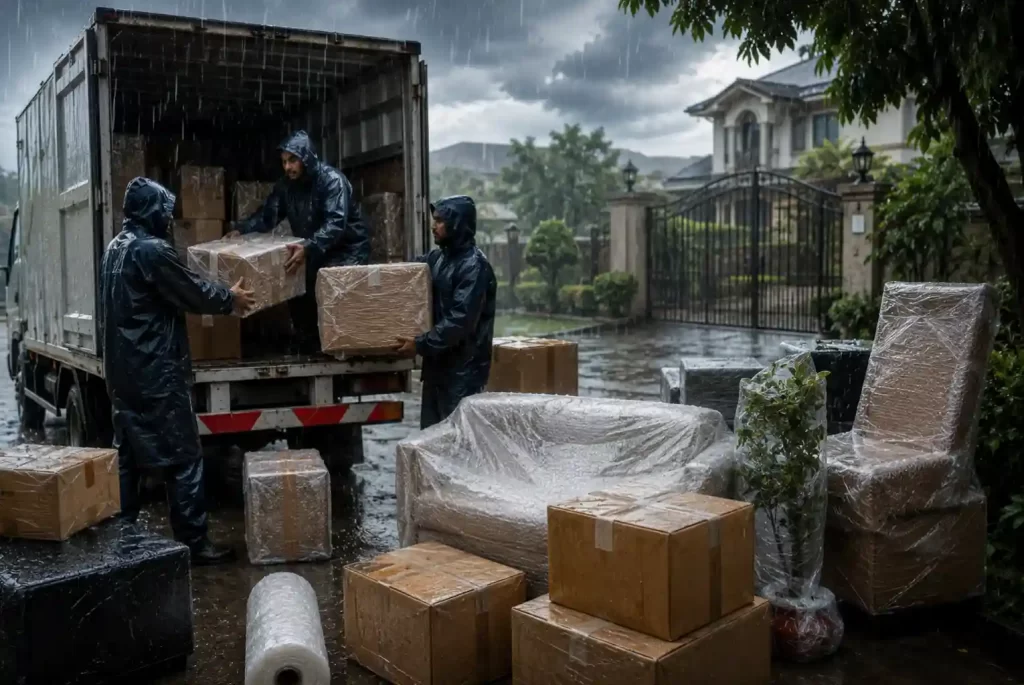
Moving during monsoon in India is far more complicated than most families expect. The excitement of a new home quickly fades when water seeps into packed boxes, wooden furniture warps from humidity, or a moving truck gets stranded on a flooded road. India’s monsoon season, running from June through September, creates a set of compounding risks that a standard moving plan simply cannot handle. If you are relocating during this period, you need a strategy built specifically around rain, humidity, delays, and water damage before moving day arrives.
Why Monsoon Relocation Is More Challenging Than Regular Moving
Standard relocation planning focuses on logistics: packing, loading, transport, and unpacking. Monsoon relocation adds an entirely separate layer of risk management on top of that.
Roads in Indian cities and highways become unpredictable during heavy rainfall. Waterlogging in areas like Mumbai, Chennai, Kolkata, and Bengaluru can block routes entirely. Loading and unloading areas turn into slippery, unsafe surfaces. The windows of dry weather narrow significantly, sometimes to just a few hours in a day.
Beyond logistics, the bigger threat is invisible: moisture and humidity. Even without direct rainfall, the ambient humidity during monsoon season is high enough to damage electronics, warp wooden furniture, soak through cardboard cartons, and trigger mold growth within days of relocation.
Families underestimate this because the damage is not always immediate. You may not notice mold on the back of a wooden wardrobe or rust forming inside an appliance for weeks after the move.
Hidden Risks Families Often Ignore During Rainy Season Relocation
Water Damage Beyond the Obvious
Most people prepare for rain but not for the secondary effects of moisture. Cardboard cartons absorb humidity even without direct contact with rain. A mattress stored in a moving truck for six hours on a humid day can absorb enough moisture to develop mold within a week. Clothes packed in thin plastic bags trap condensation and create a breeding environment for mildew.
Documents, photographs, and certificates are especially vulnerable. Once wet paper dries, it sticks together, tears, and becomes unreadable. These items are irreplaceable and are often forgotten in the packing rush.
Electrical Appliances and Humidity
Moisture inside electronics is one of the most expensive risks during monsoon relocation. Refrigerators, washing machines, televisions, and laptops should never be placed inside a moving truck without sealed, moisture-resistant wrapping. Even a small amount of condensation inside a circuit board can cause short circuits and irreparable damage.
Structural Risks During Loading and Unloading
Slippery floors, wet ramps, and waterlogged loading areas create serious injury risks for workers. Dropped furniture, broken glass, and damaged appliances are common outcomes. This is also where liability becomes unclear if you are working with an unprepared or informal moving crew.
Protecting Furniture, Electronics, and Household Items from Water Damage
Wooden Furniture
Wooden furniture is highly susceptible to moisture absorption. Sofas with wooden frames, dining tables, beds, and wardrobes can warp, crack, or develop swelling in joints when exposed to humidity. Before packing, apply a coat of furniture polish or wax as a base layer of protection. Wrap pieces tightly in stretch film followed by heavy-duty plastic sheeting. Do not rely on blankets or cloth padding alone during monsoon season as these absorb moisture.
Electronics and Appliances
Wrap all electronics in anti-static bubble wrap, then seal them inside thick plastic bags or moisture-resistant covers. Silica gel packets placed inside appliance packaging absorb ambient humidity during transport. For large appliances, use the original manufacturer’s packaging whenever available since it is designed to provide both physical and moisture protection.
Mattresses, Clothes, and Documents
Use waterproof mattress bags rated for outdoor or shipping use. Standard plastic wrapping is not enough for an item that large. For clothes, vacuum-seal bags serve two purposes: they compress volume and eliminate air contact, which reduces humidity exposure. Documents and certificates should be packed inside zip-lock bags or waterproof document pouches before being placed in any box.
Best Waterproof Packing Materials for Monsoon Moving
The standard cardboard box is your first point of failure during monsoon relocation. Upgrade your packing supplies before moving day:
- Corrugated plastic crates instead of cardboard boxes for heavy and valuable items
- Heavy-duty stretch film or shrink wrap for furniture surfaces and appliance exteriors
- Waterproof tarps to cover loaded items inside the truck
- Silica gel desiccant packets placed inside boxes containing electronics, books, and documents
- Zip-lock bags and waterproof pouches for documents, passports, and photographs
- Thick polyethylene sheets to line the floor and walls of the moving truck
Do not skip the truck lining step. Moving trucks are not waterproof by default. Gaps in the truck body, ventilation openings, and poorly sealed doors allow moisture to enter, especially during extended travel in heavy rain.
Transportation and Loading Challenges During Heavy Rain
Weather forecasting is not optional during monsoon relocation. Check forecasts for both your origin and destination cities three to four days before the move and again on the morning of moving day. Apps like Skymet and IMD’s official forecast service provide region-specific rainfall predictions.
Schedule loading and unloading during the driest part of the day, typically early morning before 8 AM. Have a backup plan ready: if the forecast changes, be prepared to delay by 24 hours rather than risk the entire move.
Before loading, inspect the moving truck for gaps, rusted panels, and door seal quality. A professional mover should provide a truck with intact seals. If you are hiring independently, this check is your responsibility.
Wet loading areas require rubber matting or wooden boards placed on the floor to prevent slipping. Workers carrying heavy furniture on wet staircases face genuine injury risk, and dropped items on wet floors sustain more damage due to impact.
Preventing Mold, Fungus, and Moisture Buildup After Moving
Mold does not need much time to establish itself. In high-humidity conditions during monsoon, mold can begin forming on wooden surfaces, fabric, and walls within 48 to 72 hours of exposure.
After reaching your new home, do not unpack directly onto the floor if the building is damp or if it shows signs of water seepage. Open all windows and run ceiling fans to improve air circulation before unpacking boxes.
Place moisture-absorbing products such as silica gel blocks, calcium chloride dehumidifiers, or activated charcoal sachets in rooms before bringing in furniture. These are available at hardware stores and are highly effective at reducing indoor humidity levels.
Wooden furniture and mattresses should be unpacked and allowed to air in a well-ventilated space before being placed against walls. Wall contact restricts airflow and accelerates mold growth.
Check the new home for existing mold spots before moving in. Inspect corners, behind wardrobes, under sinks, and around windows. Addressing existing mold before bringing in your belongings is far easier than treating mold that has spread to your furniture.
Managing Delays, Traffic, and Emergency Situations
Long-distance monsoon moves carry additional risk. A truck that departs from Delhi heading to Pune during heavy rainfall may face highway closures, washed-out roads, or border check delays that extend travel time by 12 to 24 hours. During this extended transit, your belongings are exposed to sustained humidity.
Plan for delays by building a buffer day into your schedule. Avoid booking services that depend on precise timing, such as elevator reservations or building access slots, without a cancellation clause.
Carry an emergency kit in your personal vehicle that includes basic tools, rain gear, flashlights, and a portable phone charger. During monsoon moves, access to essential documents, medication, and phone power can become critical if you are separated from your truck due to road closures.
Common Mistakes Families Make While Moving During Monsoon
Several patterns consistently lead to damaged belongings and failed relocations during the rainy season:
Using old or recycled cardboard boxes is the single most common mistake. These degrade rapidly in humidity and will not hold under the weight of wet conditions. Skipping furniture polish before packing, not lining the moving truck, leaving electronics without moisture barriers, and failing to check the new home for dampness before arrival are equally costly errors.
Families also frequently underestimate loading time during rain. What takes 90 minutes in dry conditions can take three to four hours when workers need to pause for heavy showers, re-cover items, or wait for slippery conditions to improve.
DIY Moving vs Professional Movers During Rainy Season
DIY moving during monsoon is viable for short-distance moves within the same city, provided you have appropriate packing materials and a covered vehicle. For anything involving heavy furniture, long distances, or high-value electronics, hiring experienced professional movers is the more cost-effective choice when you factor in potential damage costs.
Ask movers these specific questions before hiring during monsoon season: Do your trucks have sealed interiors and waterproof linings? What is your policy for weather-related delays? Do you provide transit insurance that covers water damage? Do your crews use rubber matting and safety equipment for wet loading conditions?
A mover that cannot clearly answer these questions is not prepared for monsoon relocation.
Tips for Unpacking and Drying Belongings After Relocation
Allow 24 to 48 hours for the new home to ventilate before completing unpacking. Unpack electronics last and only after confirming that the rooms are dry and at a stable temperature. Do not plug in appliances that may have been exposed to moisture until they have been at room temperature for at least 24 hours.
Wipe down all wooden surfaces with a dry cloth after unpacking. Check mattresses for any dampness before placing them on bed frames. Run a dehumidifier in bedrooms and storage areas for the first week after moving in during monsoon season.
Final Checklist for Safe Monsoon Relocation in India
Before moving day:
- Check weather forecasts for both cities
- Inspect the moving truck for seal quality and waterproofing
- Buy waterproof packing materials: stretch film, plastic crates, silica gel, polyethylene sheets
- Wrap all electronics in anti-static wrap sealed in plastic
- Apply polish or wax to wooden furniture before packing
- Pack documents and valuables in waterproof pouches
- Confirm transit insurance that covers water damage
On moving day:
- Begin loading early morning during the driest window
- Line the truck floor and walls with polyethylene sheets
- Cover all loaded items with waterproof tarps before closing the truck
- Ensure workers use rubber matting in wet areas
After arrival:
- Ventilate the new home before unpacking
- Place moisture absorbers in each room
- Unpack electronics last after confirming dry conditions
- Inspect wooden furniture and mattresses for moisture
- Check walls and corners for existing mold
Conclusion
Moving during monsoon in India requires a fundamentally different approach than a standard relocation. The risks are real, the damage can be expensive, and many families discover these lessons only after the move. With the right packing materials, a weather-aware schedule, a properly lined truck, and attention to Mold prevention after arrival, a monsoon move can be completed safely and without significant loss. The investment in preparation is always smaller than the cost of damaged furniture, ruined electronics, or a mold-infested new home. Plan precisely, pack with moisture in mind, and choose movers who understand what India’s rainy season demands.

