
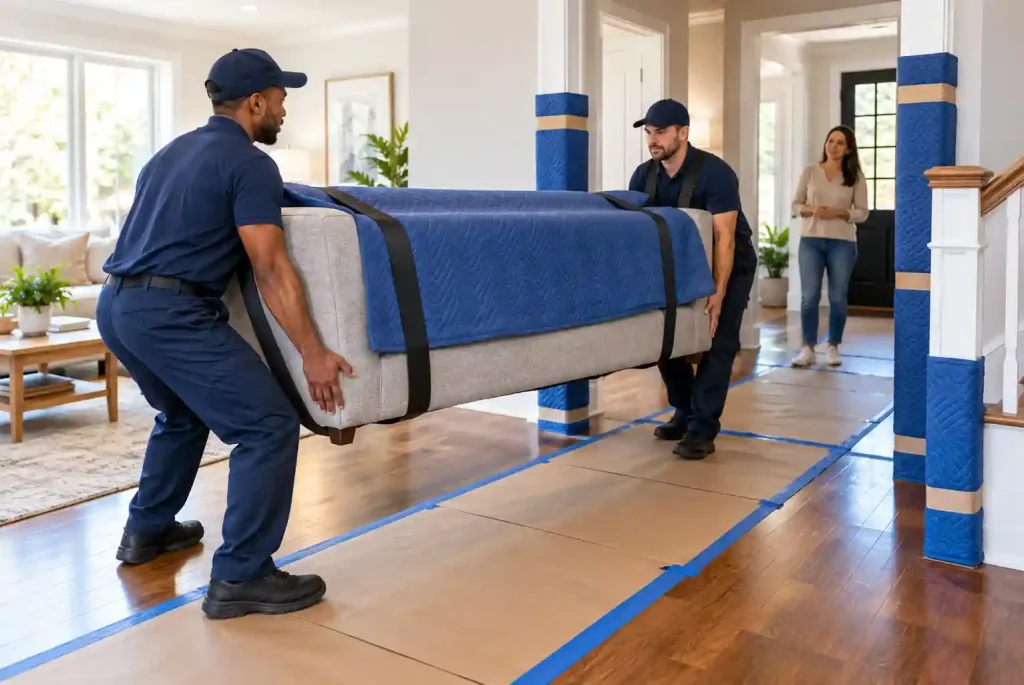
Moving a heavy sofa, wardrobe, or dining table can feel like a big challenge. One wrong move can scratch your floor, dent a wall, or hurt your back. This guide shows you exactly how to move heavy furniture safely without damaging your home. You will learn simple steps to protect your walls, floors, and doorways. You will also learn the right furniture moving equipment to use, safe lifting techniques, and common mistakes to avoid. Whether you are rearranging one room or preparing for a full house move, these tips will help you finish the job without stress or damage. Keep reading to make your next furniture move smooth, safe, and worry-free.
Why Moving Heavy Furniture Needs Careful Planning
Heavy furniture is not just hard to lift. It can also cause real damage if you move it the wrong way. A dragged sofa can leave scratches on wood or tile floors. A tilted cupboard can hit a wall or door frame. And lifting the wrong way can hurt your back for days. Safe furniture lifting techniques and a little planning can prevent all of this. Before you touch any heavy item, it helps to think through the whole move, from the starting point to the final spot.
Get Your Home Ready Before You Move Furniture
Clear the Path
Remove rugs, toys, shoes, and small furniture from the path you will use. A clear path means fewer chances of tripping while carrying something heavy.
Protect Your Floors
One of the easiest ways to protect floors while moving furniture is to lay down old blankets, cardboard sheets, or furniture sliders under each leg. This stops scratches on wood, tile, and marble floors. Never drag furniture directly across a bare floor.
Protect Your Walls and Door Frames
Corners of tables, cupboards, and sofas often bump into walls. Use moving blankets or bubble wrap on the corners of large items. This simple step for wall protection while moving can save you from expensive paint touch-ups later.
Measure Doorways and Hallways
Before you lift anything, measure the width of your doorways, hallways, and staircases. Then measure the furniture, including its widest point. If the furniture is wider than the doorway, you may need to tilt it, remove a door, or take off furniture legs.
Essential Tools for Moving Heavy Furniture Safely
Good furniture moving equipment makes the job faster and safer. Here are the tools worth having:
- Furniture moving dolly: a small platform on wheels for heavy items like fridges, cupboards, and sofas.
- Furniture sliders: plastic or felt discs that go under furniture legs so you can slide items without scratching the floor.
- Moving straps: worn over the shoulder to help carry heavy furniture with your legs instead of your back.
- Moving blankets: thick covers that protect furniture, walls, and door frames from scratches and dents.
- Work gloves: give you a better grip and protect your hands from sharp edges.
Safe Lifting Techniques to Protect Your Back
Back injuries are one of the most common problems when people move heavy furniture on their own. Following safe furniture lifting techniques can prevent this. Keep these points in mind:
- Bend your knees, not your back, when you lift.
- Keep the furniture close to your body as you carry it.
- Lift with your legs, and keep your back straight.
- Never twist your body while holding something heavy. Turn your feet instead.
- Ask for help with anything that feels too heavy for one person.
Step-by-Step Guide to Moving Heavy Furniture
Here is a simple step-by-step way to move heavy furniture safely without damaging your home:
- Empty the furniture first. Remove drawers, shelves, and any loose parts to make it lighter.
- Wrap it in moving blankets. Cover corners and edges that could hit a wall or door.
- Place sliders under the legs. Push the furniture slowly instead of lifting it, where possible.
- Use a dolly for very heavy items. Tilt the furniture slightly, slide the dolly underneath, and strap it in place.
- Get a second person for stairs and tight corners. One person should guide from the front.
- Take breaks when needed. Rushing increases the risk of drops and injuries.
How to Move Furniture Through Doorways and Tight Spaces
Doorways are one of the trickiest parts of any furniture move. If a sofa or wardrobe does not fit straight through, try tilting it on its side. Measure the diagonal width of the doorway, since a tilted item often fits through a space that looked too narrow. For very large pieces, it may be easier to remove the door from its hinges for a few minutes. Always move slowly through doorways and check both sides for wall damage as you go.
Common Mistakes to Avoid When Moving Heavy Furniture
- Dragging furniture across the floor without sliders or padding.
- Lifting with your back instead of your legs.
- Skipping the doorway and hallway measurements.
- Trying to move large items alone.
- Rushing the job instead of planning each step.
Why Professional Relocation Services Can Help
Not everyone has the time, tools, or physical ability to move heavy furniture on their own, and that is where professional movers can help. Trained moving teams know how to handle bulky or fragile items, use the right equipment, and pack furniture properly for transport. Most professional relocation services offer door-to-door service, so items are picked up from your home and delivered to the new one. Many also offer insurance assistance in case of accidental damage during transit, along with proper documentation for the move. For heavy, valuable, or awkwardly shaped furniture, hiring professional help can reduce stress and lower the risk of injury or damage compared to doing it entirely on your own.
Frequently Asked Questions
What is the best way to move heavy furniture without damaging floors?
The best way is to place furniture sliders or thick padding under each leg before moving anything. This lets you push or slide the item instead of dragging it, which prevents scratches on wood, tile, and marble floors. Always lift corners slightly rather than pulling furniture directly across the surface.
Can one person move heavy furniture alone?
Very light furniture can often be moved by one person using sliders. However, heavy items like sofas, wardrobes, and cupboards are safer with two people. Moving heavy furniture alone increases the risk of back injury and accidental damage to floors or walls.
What tools do I need to move heavy furniture safely?
A basic furniture moving dolly, furniture sliders, moving straps, moving blankets, and work gloves cover most home moves. These tools make it easier to lift, slide, and protect both the furniture and your home during the move.
How do I move a heavy sofa through a narrow doorway?
Tilt the sofa on its side and angle it diagonally through the doorway. Measure the doorway’s diagonal width first, since tilted furniture often fits through gaps that look too small. If it still does not fit, consider removing the door from its hinges for extra clearance.
Is it safe to drag furniture across the floor?
Dragging furniture without protection is one of the fastest ways to scratch or damage floors. It is safer to use sliders, blankets, or a dolly. If you must slide furniture briefly, always place a protective layer between the furniture and the floor first.
When should I hire professional movers for furniture?
Consider hiring professional movers when furniture is very heavy, fragile, or awkwardly shaped, or when you do not have enough people to help safely. Professional relocation services are also useful for staircases, narrow hallways, or long-distance moves where the risk of damage is higher.
How can I protect my walls when moving furniture?
Wrap the corners and edges of large furniture with moving blankets or bubble wrap before moving it. Move slowly through hallways and doorways, and have a second person guide the furniture from the front to watch for wall contact on both sides.
Conclusion
Moving heavy furniture does not have to end in scratched floors, dented walls, or a sore back. With the right preparation, such as clearing the path, measuring doorways, and using tools like sliders, dollies, and moving blankets, you can move heavy furniture safely without damaging your home. Safe lifting techniques protect your body, while simple planning protects your property. And for particularly heavy, fragile, or bulky items, professional relocation services remain a practical option worth considering. Take your time, follow these steps, and your next furniture move should go smoothly.

