
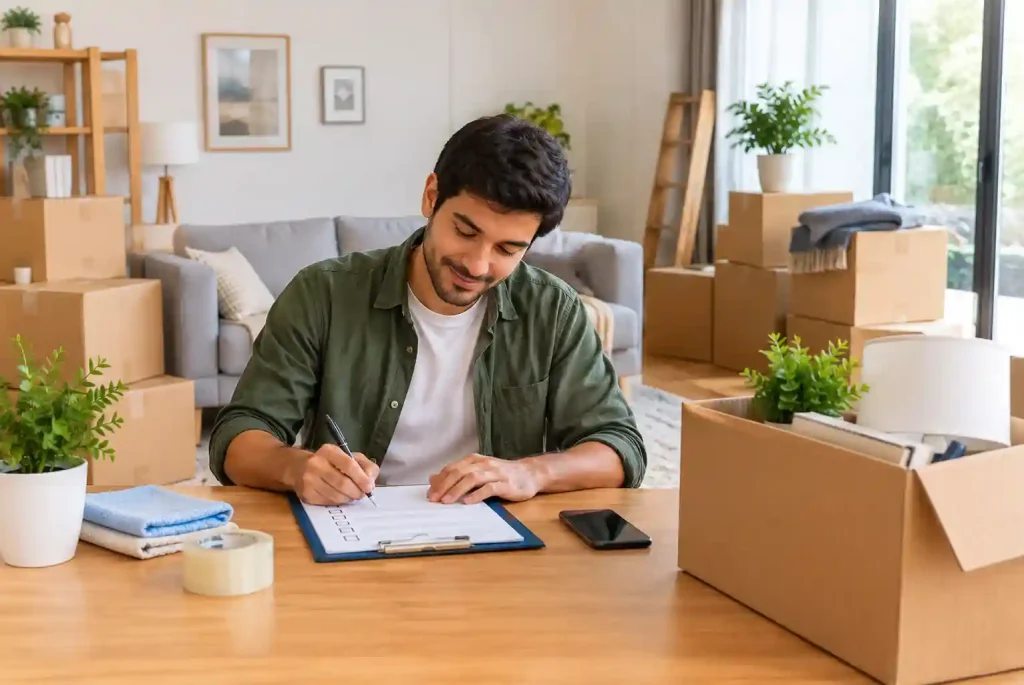
Moving to a new home is exciting, but it is also a lot of work. Many people feel stressed because they do not know where to start. Small tasks pile up, and moving day arrives too fast.
This guide shows you how to prepare your home for relocation in simple steps. You will learn what to do and when to do it. You will also find a pre-move checklist, a list of key documents, cost factors, common mistakes, and answers to common questions.
When Should You Start Preparing for a Move?
Start 4 to 6 weeks before your moving date. If you have a large home or are moving to another city, start 8 weeks ahead. More time means less stress and fewer mistakes.
Here is a simple timeline:
- 8 weeks before: Plan, set a budget, and sort your things.
- 4 weeks before: Book movers and start packing.
- 2 weeks before: Update your address and settle your bills.
- 1 week before: Pack the rest and prepare an essentials bag.
- Moving day: Check everything and supervise the loading.
Step-by-Step Home Moving Checklist
You can also download the Handy Move Planning Kit from PM Relocations. It has guides on planning logistics, staying organised, and final packing. Use it alongside the checklist below.
8 to 6 Weeks Before the Move
Begin with a plan. Write down your moving date, your new address, and your total budget.
- Walk through every room and decide what to keep, sell, donate, or throw away.
- Sell or donate things you no longer use. Fewer items mean lower moving costs. If your new home is smaller or not ready yet, you can keep extra items in a safe storage and warehouse facility for a while.
- Ask packers and movers for quotes. Compare at least three companies.
- Check if your housing society needs a No Objection Certificate (NOC) or a gate pass for moving out. Many Indian societies ask for this.
- Inform your landlord if you rent. Check your notice period and security deposit terms.
4 Weeks Before the Move
Now book your moving company and start packing.
- Confirm your booking in writing.
- Buy strong boxes, tape, bubble wrap, and markers. Or ask your mover to supply packing materials.
- Start with items you rarely use, like winter clothes, books, and showpieces. Not sure what comes next? This guide on what to pack first when moving house explains the order room by room.
- Label every box with the room name and a short list of contents.
- Take photos of your electronics and their wiring. This makes setup easier later.
2 Weeks Before the Move
This is the time for paperwork and updates.
- Update your address on your bank accounts, insurance policies, and employer records.
- Apply for an address change on your Aadhaar, driving licence, and vehicle registration certificate. Check the official portals for current steps.
- Ask for transfer certificates if your children are changing schools.
- Inform your electricity, water, gas, internet, and cable providers. Ask about disconnection and new connections.
- Clear any pending bills, including maintenance dues at your society.
1 Week Before the Move
- Pack almost everything except daily items.
- Defrost your fridge and freezer at least 24 hours before moving day.
- Empty and dry your washing machine.
- Disassemble large furniture like beds and wardrobes, or ask the movers to do it. If you handle bulky items yourself, read these tips on how to move heavy furniture safely.
- Pack an essentials bag with medicines, chargers, a few clothes, toiletries, important papers, and snacks.
The Day Before the Move
- Confirm the arrival time with your movers.
- Keep valuables, jewellery, and cash with you. Do not put them in the truck.
- Make sure the way to the lift or stairs is clear.
- Take meter readings and photos of your home’s condition.
Important Documents to Keep Ready
Keep these papers in one folder and carry it yourself:
- Photo ID and address proof (Aadhaar, passport, voter ID)
- Rental agreement or sale deed
- NOC from your society or landlord
- Moving company contract and quotation
- Insurance papers
- Vehicle papers, if you are moving a car or bike
- School and medical records
- A signed inventory list of your goods
For a long-distance interstate move, ask your mover about any extra papers they need, such as a goods list and a transport receipt.
What Affects Moving Costs?
No one price fits all. Packers and movers charges depend on several things:
- Distance between your old and new home
- Volume and weight of your goods
- Packing materials and the level of packing service
- Floor number and whether a lift is available
- Need for dismantling and assembly of furniture
- Insurance coverage
- Vehicle transport, if you are moving a car or bike
- Season and date. Month-end and weekends are often busier.
Always get a written quote. Ask what is included and what costs extra. A very low price can mean hidden charges later.
Safety Tips for Moving Day
- Wear covered shoes and comfortable clothes.
- Lift heavy boxes with your knees, not your back.
- Keep children and pets in a safe room, away from the work area. If you are moving with a pet, plan early. A dedicated pet move service can help with the journey.
- Never pack flammable items like gas cylinders, matches, or paint. Movers usually do not carry them.
- Keep fragile items marked and packed in the right box.
Common Mistakes to Avoid
- Starting too late. Last-minute packing leads to broken items.
- Not labelling boxes. Unpacking becomes slow and confusing.
- Choosing a mover by price alone. Check reviews, past work, and papers.
- Skipping the inventory list. You need proof of what was loaded.
- Packing valuables in the truck. Carry them with you.
- Forgetting to update your address. This can delay bank letters, bills, and parcels.
Why Professional Relocation Services Can Help
Doing everything yourself is possible, but it takes time and energy. A good professional relocation service can make the move easier, safer, and more organised.
- Professional packing: Trained staff know how to pack glass, electronics, and furniture with the right materials.
- Safe loading and unloading: Experienced teams handle bulky and fragile items with care.
- Transportation: Goods travel in suitable vehicles to your new city.
- Tracking: Many companies share updates on where your goods are.
- Insurance assistance: They can explain transit insurance options and help with claims if something goes wrong.
- Documentation: They help prepare inventory lists and moving papers.
- Door-to-door service: The same team can manage pickup and delivery.
- Less stress: You can focus on work, family, and settling in.
If you are moving a full home, look at household goods packing and moving services and compare what each package includes.
No mover can promise zero damage. So read the contract, ask about insurance, and choose an established company.
Frequently Asked Questions
How early should I start preparing my home for relocation?
Start 4 to 6 weeks before your moving date. For a large home or a long-distance move, start about 8 weeks early. This gives you time to declutter, book packers and movers, pack slowly, and finish paperwork without rushing.
What should be on a pre-move checklist?
A good pre-move checklist includes decluttering, booking movers, buying packing supplies, packing and labelling boxes, updating your address, clearing bills, and preparing an essentials bag. Add documents, meter readings, and a final room check on moving day.
What documents do I need when moving house in India?
Keep your ID and address proof, rental agreement or sale deed, society NOC, mover contract, insurance papers, and school or medical records. If you move a vehicle, carry its papers too. Keep all of them with you, not in the truck.
How do I pack fragile items safely?
Wrap each item in bubble wrap or soft paper. Use strong boxes and fill empty gaps with cloth or paper. Put heavy items at the bottom and light ones on top. Mark the box “Fragile” and “This Side Up.”
How much do packers and movers cost in India?
Costs vary by distance, goods volume, packing level, floor, and insurance. There is no fixed price. Get written quotes from at least three companies and compare what each one includes before you decide.
Should I hire professional movers or move on my own?
Doing it yourself may cost less for a small move. For a full house, a long distance, or fragile items, professional movers save time and reduce risk. Think about your budget, time, and the value of your belongings.
What should I not pack in the moving truck?
Keep valuables, cash, jewellery, important documents, medicines, and electronics chargers with you. Do not pack flammable items like gas cylinders, matches, or paint. Also avoid packing perishable food.
Conclusion
Knowing how to prepare your home for relocation makes the whole move smoother. Start early, declutter first, and follow a clear moving checklist. Keep your documents safe, update your address on time, and compare movers carefully.
Your next step is simple. Pick your moving date today, work backward, and write down a task for each week. If you want expert help, talk to the PM Packers team and ask for a written quote. Small steps done early will save you time, money, and stress.

