
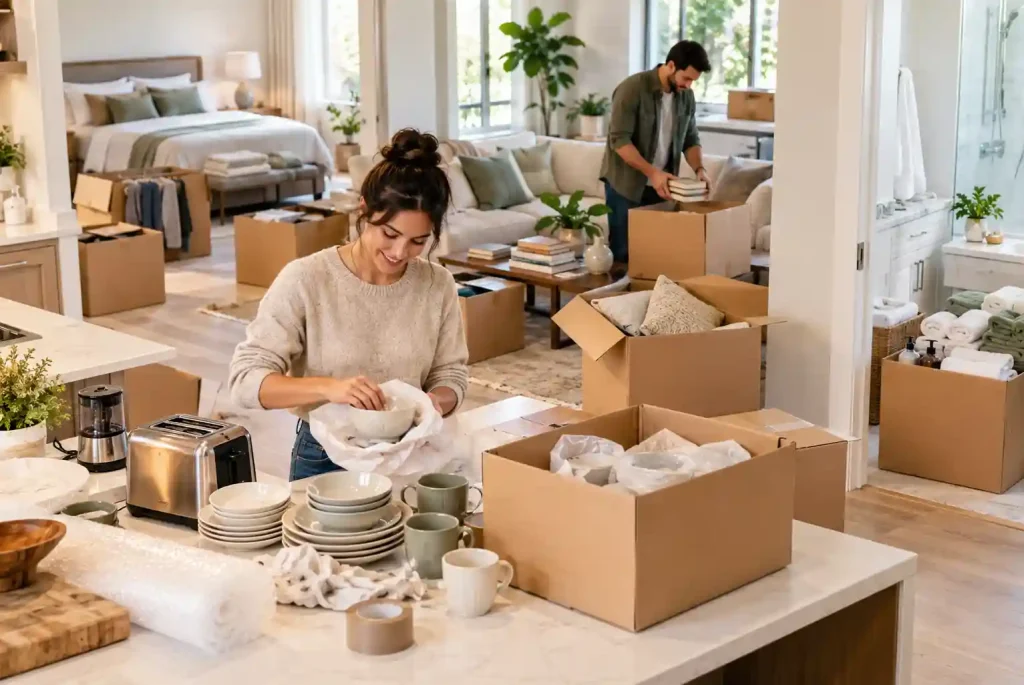
Moving day feels less scary when you know where to start. Most people open a box, get overwhelmed, and end up packing at random. This creates chaos on moving day and makes unpacking even harder.
This guide gives you a simple, room-by-room packing order for moving house. You will learn what to pack first, what to pack last, and how to protect your things along the way. Whether you are moving across Gurgaon or to another city in India, this room-by-room guide will save you time, stress, and money.
Why Packing Order Matters
The biggest packing mistake is starting with things you use every day. This leaves you without basic items until moving day and often leads to rushed, careless packing at the last minute.
A good rule is simple: pack the things you use least, first. Save daily essentials for last.
Here is the general order most professional packers follow:
- Storage rooms, attics, and garages
- Guest rooms and rarely used spaces
- Books, decorations, and seasonal items
- Living room and dining room
- Bedrooms (except essentials)
- Kitchen (except daily-use items)
- Bathroom and last-minute essentials
Start With Storage Areas and Rarely Used Rooms
Begin your house packing checklist with storerooms, attics, basements, or garages. These areas hold items you do not touch often, so packing them early causes no disruption to daily life.
What to pack first here:
- Out-of-season clothes and blankets
- Old documents and files you rarely check
- Sports equipment and camping gear
- Tools you do not use weekly
- Extra utensils or appliances in storage
Label each box clearly with the room name and a short list of contents. This single habit saves hours during unpacking after moving.
A Simple Example
Suppose you have a garage with gardening tools, a spare tyre, and old paint cans. Pack the paint cans separately, since many transport companies restrict flammable liquids. Wrap tools in old cloth or bubble wrap before boxing them.
Pack the Guest Room and Decorative Items Next
Guest rooms and decorative pieces are used rarely, so they are ideal for early packing.
Items to pack in this stage:
- Books and bookshelves
- Photo frames and wall art
- Showpieces and decorative vases
- Guest bedding and extra pillows
- Curtains not currently in use
Wrap fragile decorative items in bubble wrap or old newspaper. Place heavier items at the bottom of the box and lighter ones on top. This basic fragile items packing tip prevents breakage during transport.
Living Room and Dining Room Packing Tips
The living room usually has a mix of fragile, bulky, and electronic items, so it needs careful planning.
Pack in this order:
- Books, showpieces, and non-essential decor
- Extra cushions, throws, and rugs
- Electronics like TVs and speakers (keep original boxes if available)
- Dining crockery, except what you need for daily meals
- Furniture, closer to moving day
For electronics, take a photo of the wiring setup before disconnecting cables. This small step makes reassembly much easier at your new home. Use original manufacturer boxes when possible, since they are designed to protect the device during transport.
Bedroom Packing: What to Pack and What to Leave
Bedrooms need a careful balance. You want to pack early but still need daily clothes, medicines, and essentials until the last day.
Pack early:
- Off-season clothes
- Extra bedsheets and blankets
- Books and personal items not used daily
- Jewellery boxes and safes (pack these yourself, do not leave to movers)
Pack last:
- Daily-wear clothes
- Chargers and electronics you use daily
- Medicines
- Important documents like Aadhaar card, PAN card, and property papers
Keep a small “essentials box” separate from other boxes. This should travel with you, not in the moving truck, and should contain daily essentials for the first two to three days at your new home.
Kitchen Packing: A Room That Needs Extra Care
The kitchen is often the hardest room to pack because it holds fragile items, daily-use tools, and heavy appliances together.
Step-by-step kitchen packing order:
- Pack rarely used appliances first (juicers, extra cookware sets)
- Wrap glassware and crockery individually in packing paper
- Pack heavier items like cookware in small, sturdy boxes
- Keep one set of daily-use utensils aside until the last day
- Empty and clean the refrigerator at least 24 hours before moving
Use dish barrel boxes or thick packing paper for glassware and crockery packing. Avoid overpacking boxes with heavy items like plates, since heavy boxes are harder to lift and more likely to break during transport.
Bathroom and Last-Minute Essentials
The bathroom should be packed last since you need it until the final hours before moving.
What to do:
- Pack extra toiletries and unused items a day or two before moving
- Keep one toiletry kit aside for moving day
- Dispose of expired medicines and old cosmetics safely
- Pack cleaning supplies separately, since some are flammable or restricted during transport
Common Packing Mistakes to Avoid
- Packing daily essentials too early
- Using boxes that are too large for heavy items
- Not labelling boxes clearly
- Mixing fragile and heavy items in the same box
- Waiting until the last day to start packing
Avoiding these mistakes is one of the simplest ways to make moving house smoother and less stressful.
Why Professional Relocation Services Can Help
Packing an entire home takes time, planning, and physical effort. Professional relocation services can make this process easier, safer, and more organised.
Trained movers know how to handle fragile items packing, bulky furniture, and electronics correctly, using the right materials for each item. Professional packing reduces the risk of damage during loading, transport, and unloading.
Most relocation companies also offer:
- Door-to-door service, so you do not need to manage transport separately
- Tracking of your shipment during transit
- Help with documentation, especially for interstate or international moves
- Insurance assistance in case of damage or loss
- Safe handling of bulky or fragile items like glass tables, mirrors, or appliances
This does not mean professional help removes all effort on your part. You will still need to sort belongings and decide what to move. But for heavy lifting, safe packing, and organised transport, professional movers can significantly reduce stress and save time.
Frequently Asked Questions
1. What should I pack first when moving house?
Start with items you rarely use, such as things in storage rooms, guest rooms, and seasonal items. Save daily essentials like clothes, medicines, and kitchen tools for the last one or two days before moving.
2. How many days before moving should I start packing?
For a full house, start packing at least two to three weeks in advance. Begin with storage areas and rarely used rooms, then move toward daily-use spaces closer to moving day.
3. How do I pack fragile items safely?
Wrap each fragile item individually in bubble wrap or packing paper. Place heavier items at the bottom of the box and lighter ones on top. Label the box clearly as “fragile” so movers handle it with care.
4. What should go in an essentials box?
An essentials box should have daily-wear clothes, chargers, medicines, toiletries, and important documents. Keep this box with you during the move instead of loading it onto the moving truck.
5. Can professional movers pack my entire house?
Yes, most relocation companies offer full packing services, including materials, labour, and labelling. This is helpful if you have limited time or a large home to pack.
6. How do I pack a kitchen for moving?
Pack rarely used appliances and extra cookware first. Wrap glassware individually, and keep one set of daily-use utensils aside until the last day. Empty and clean the refrigerator before moving day.
7. What items should I not pack in moving boxes?
Avoid packing flammable liquids, gas cylinders, perishable food, and important original documents in moving boxes. Carry documents and valuables with you separately.
Conclusion
A smooth move starts with the right packing order for moving house. Begin with storage areas and rarely used rooms, then work toward daily-use spaces like the kitchen and bathroom. Keep an essentials box ready, label every box clearly, and give fragile items extra protection.
Following this room-by-room packing guide will help you stay organised, avoid last-minute stress, and settle into your new home faster. And if the process feels overwhelming, professional relocation services are there to help you pack, move, and settle in safely.

